2021 · Album
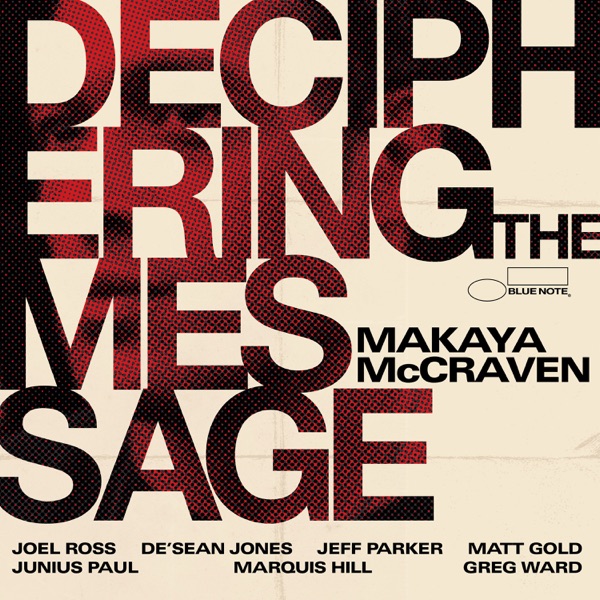
Deciphering the Message
Recorded 2021 · Blue Note Records · Release Date: November 19, 2021
Reading the Drummer's Language
McCraven listens as hard as he plays, letting silence and space do half the work.
Deciphering the Message finds Makaya McCraven at a point where he's stopped trying to prove anything and started asking better questions. This album sits squarely in the middle of his career—not an early statement, not a retrospective—but a record where you can hear him genuinely curious about what happens when you strip away the obvious answers. The rhythm section drives most of these tracks, and McCraven's approach to the kit feels more conversational than flashy. He's interested in texture and restraint, in the spaces between hits as much as the hits themselves.
The album caught serious attention from critics. The Guardian and Loud and Quiet both gave it four stars, and AllMusic matched that score. Even DownBeat's slightly more measured three-and-a-half stars speaks to something solid and worth your time. McCraven's production choices here are worth noting—there's a clarity to these sessions that lets you hear exactly what each player is doing. You're not swimming in reverb or buried under layers. Each instrument occupies its own space. That directness might be why some listeners connect immediately while others need time to warm up to it.
If you've heard his earlier work, you'll recognize his signature move: taking the drummer's role as a compositional tool rather than just a timekeeping job. But here the arrangements feel less experimental for its own sake and more purposeful. There's a jazz fundamentalism running through these tracks that never feels reactionary. This is a solid place to start if you're new to McCraven, though it's not the flashiest entry point. It's the sound of someone comfortable enough to be quiet when quiet serves the music better.