Rhythm Before Everything Else
Before you get to Iyer's harmonic choices or his compositions, you notice the rhythm. He treats the piano like a percussion instrument as much as a melodic one. His left hand isn't just comping — it's laying down something almost physical, while his right hand locks into it rather than floating above. Listen to Historicity (2009) and you'll hear it immediately. His version of Michael Jackson's "Human Nature" is transformed so completely that it almost sounds like an Iyer composition. That's the point: he has a remarkable ability to absorb outside material and make it move according to his own rhythmic logic.
Iyer grew up in upstate New York in a Tamil family, and the influence of Carnatic music on his playing runs deep. In South Indian classical music, rhythm is a structural force, and you can hear that sensibility in Iyer's playing — phrases that shift against the beat, grooves that seem to breathe, even ballads with an underlying pulse that never quite sits still. His time studying with Steve Coleman and the M-Base musicians added another layer, with its emphasis on rhythmic patterns and structured improvisation.
His trio with bassist Stephan Crump and drummer Marcus Gilmore is probably the best place to start. On Accelerando (2012), they sound less like a pianist with a rhythm section than three musicians constantly reacting to one another. Gilmore, in particular, is worth listening for. The connection between his drumming and Iyer's playing is extraordinary.
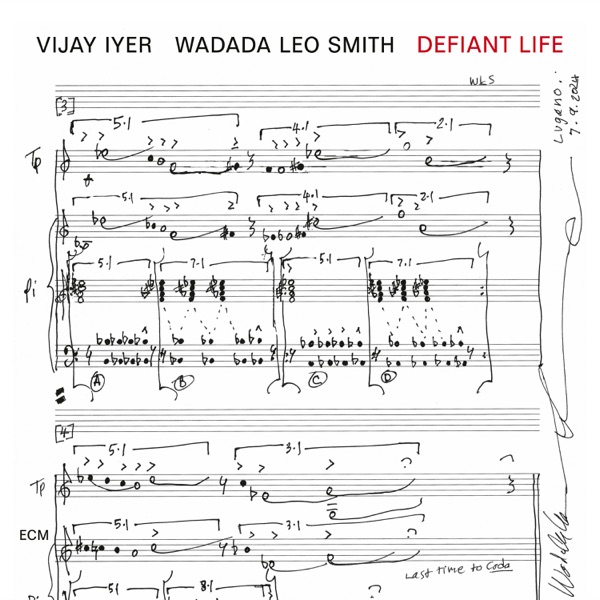
But don't stop there. Far From Over (2017), recorded with Iyer's sextet, takes the music into a larger, more energetic space. A Cosmic Rhythm With Each Stroke (2016), his collaboration with trumpeter Wadada Leo Smith, goes in almost the opposite direction: sparse, patient, and quietly intense.
Iyer is also an unusually intellectual figure in jazz, with a PhD from Berkeley and an academic career alongside his work as a musician. But you don't need to know any of that to understand the music. For all the thinking behind it, his playing feels physical. He wants the music to move.
If you're new to Iyer, start with Historicity (2009). It's accessible without being easy, and the trio grabs you almost immediately. Then try Accelerando (2012) and Far From Over (2017). By then, you'll probably understand what all the talk about rhythm is about.